

// A diversified industrial manufacturer
Many brands. One platform.
A multi-billion-dollar industrial company with a portfolio of specialty brands, running a multi-year consolidation of its digital estate.
Years of acquisitions left dozens of brand websites on different stacks with no shared system - and a consolidation mandate with no blueprint.
UX strategy, research, design system, content strategy, migration, AI-ready architecture.
Digital Experience & UX, Design Systems, Web Design & Development.
// 01 The problem
The problem.
Every brand in the portfolio had its own website, its own stack, its own way of telling the story. Customers who bought from three brands never knew they were one company. Internally, every business unit had its own opinion about what the unified site should be - and no evidence to settle the argument.
The mandate was consolidation, but consolidation done badly destroys the search equity each brand spent years earning. The work had to unify the experience and protect the traffic at the same time.
// 02 The approach
The approach.
Structure before screens. We ran a research program across the business units first, so the platform's architecture came from how customers actually buy - not from who argued loudest. Every structural decision after that point had evidence behind it.
// Multi-year program - workstreams across UX, content, and development - staged client reviews
// 03 Delivery
What was implemented.
- A stakeholder research program spanning the business units: interview guides, session synthesis, and audience/jobs-to-be-done maps for every major buyer type.
- A full page inventory for the unified platform, prioritized into a production roadmap with named workstream ownership per batch.
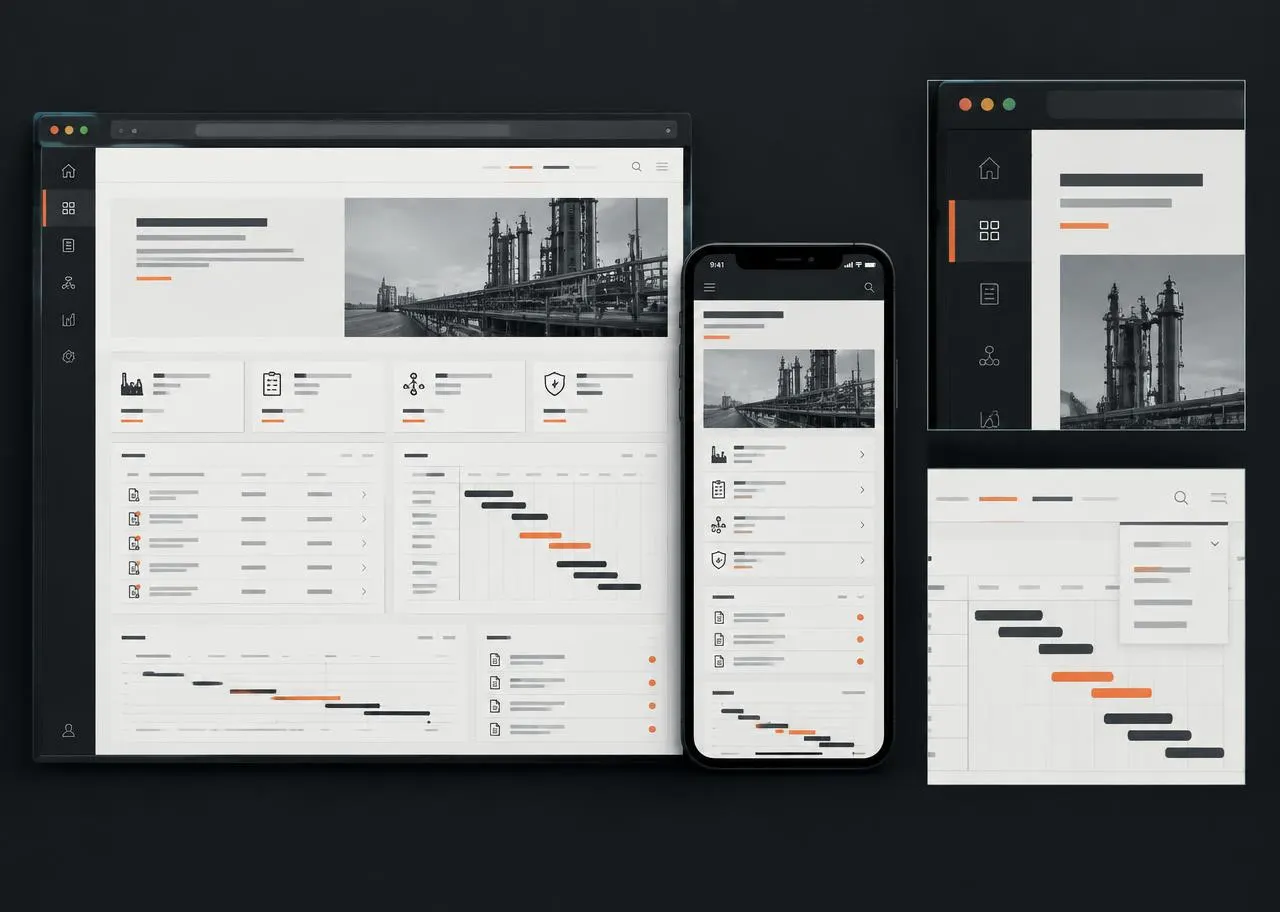
- A high-fidelity wireframe program for the platform's core templates - homepage, segment landing, solution, product detail, company, and category pages - each with a written page brief covering layout rationale, content structure, and component inventory.
- A shared design system: typography, spacing, and a component library with documented states, built so every future brand migration plugs into the same system.
- A clickable prototype for stakeholder walkthroughs and user testing.
- A content migration framework: URL-by-URL mapping, a 301 redirect process designed to transfer search equity rather than destroy it, and post-launch monitoring benchmarks.
- AI-ready content architecture: schema.org structured data and LLM-optimized content patterns per page template, so the platform is discoverable by the systems buyers increasingly ask first.
- A resource center architecture for technical documents - taxonomy, naming conventions, and migration path for data sheets and multi-language assets.
- A living delivery console: the project's page inventory, design system, decisions log, and prototype in one place, so the client always sees the current state instead of asking for it.
// 04 Working detail
Inside the build.
{ "@context": "https://schema.org", "@type": "Product", "name": "Product Name", "brand": {"@type": "Brand", "name": "Brand Name"}, "category": "Industrial > Specialty Products", "url": "https://example.com/products/item", "additionalProperty": [ {"@type": "PropertyValue", "name": "application", "value": "Segment-specific use"} ]}:root { --color-brand-primary: #1B3A5C; --color-surface: #FFFFFF; --font-display: "Brand Sans", sans-serif; --space-section: 96px; --radius-card: 4px;}// 05 Results
Results.
Four legacy properties planned into one shared platform and migration sequence.
One component system defined for the first wave of business-unit pages.
Prototype reviews replaced separate page-by-page alignment decks.
// Next project
Industrial & manufacturingOne family, one system.// The full picture
The names come out on a call.
Every engagement above has a full case study behind it - the client, the constraints, the numbers. We share those live, under NDA.